April 18, 2026 | Updated May 11, 2026
From Search to Decision Intelligence: How Agentic AI Could Reshape Real Estate
Agentic AI could move real estate platforms beyond listing search into decision intelligence for affordability, financing, insurance, investment, and housing risk.
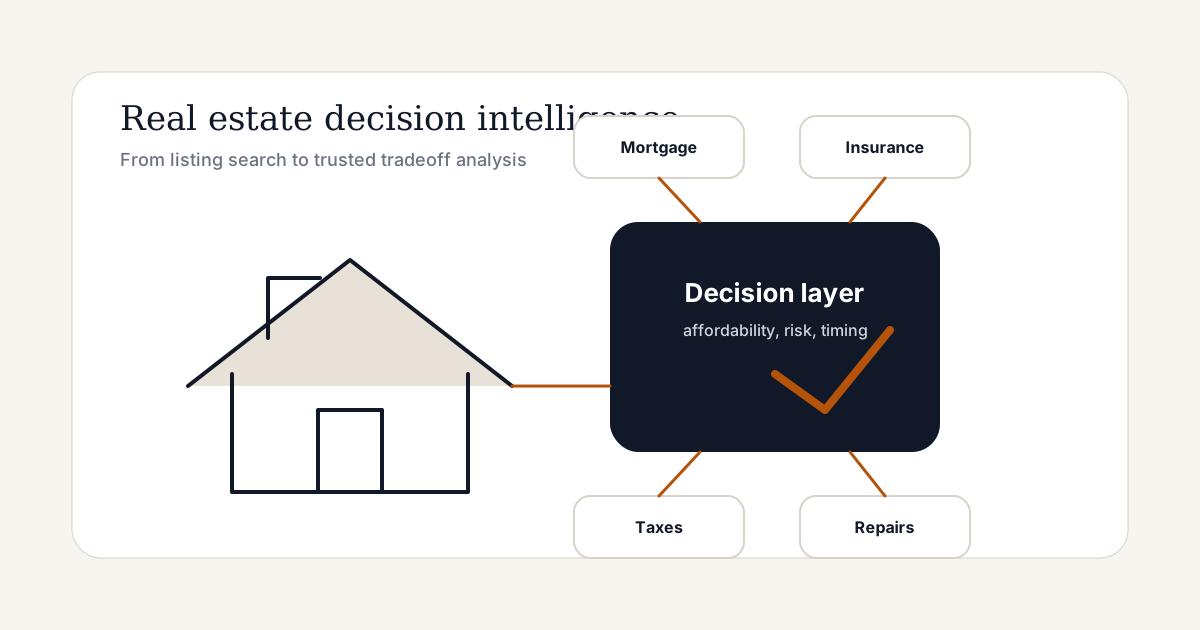
Real estate search has become very good at helping people find options. The next opportunity is helping people understand what those options actually mean for their finances, risk, timing, and life decisions.
Geopolitics is no longer something consumers experience only through headlines. It now shows up in the price of homes, the cost of insurance, the availability of materials, construction timelines, mortgage rates, and ultimately the monthly payment families have to make.
War, tariffs, supply chain disruptions, energy costs, labor shortages, insurance premiums, and interest rates are all connected. Together, they are reshaping housing affordability in ways consumers may not fully see, but definitely feel.
That is why the direction companies like Zillow are taking with AI stood out to me. The interesting part is not another AI-powered search feature. The interesting part is the shift it signals.
For years, real estate platforms have optimized for discovery. Search by ZIP code. Filter by price. Compare bedrooms. Scroll through listings. That experience is useful, but it only solves the first part of the journey.
The hardest part begins after someone finds a property they like.
That is when the real questions start. Can I afford this home long term? What happens if insurance costs rise? Should I wait six months? Is this property actually better than another one that looks similar online? What risks am I missing? What is the right decision for my financial situation, timeline, and risk tolerance?
This is where Agentic AI can create real value. Not as a chatbot layered on top of listings, but as a decision-support layer that connects fragmented systems.
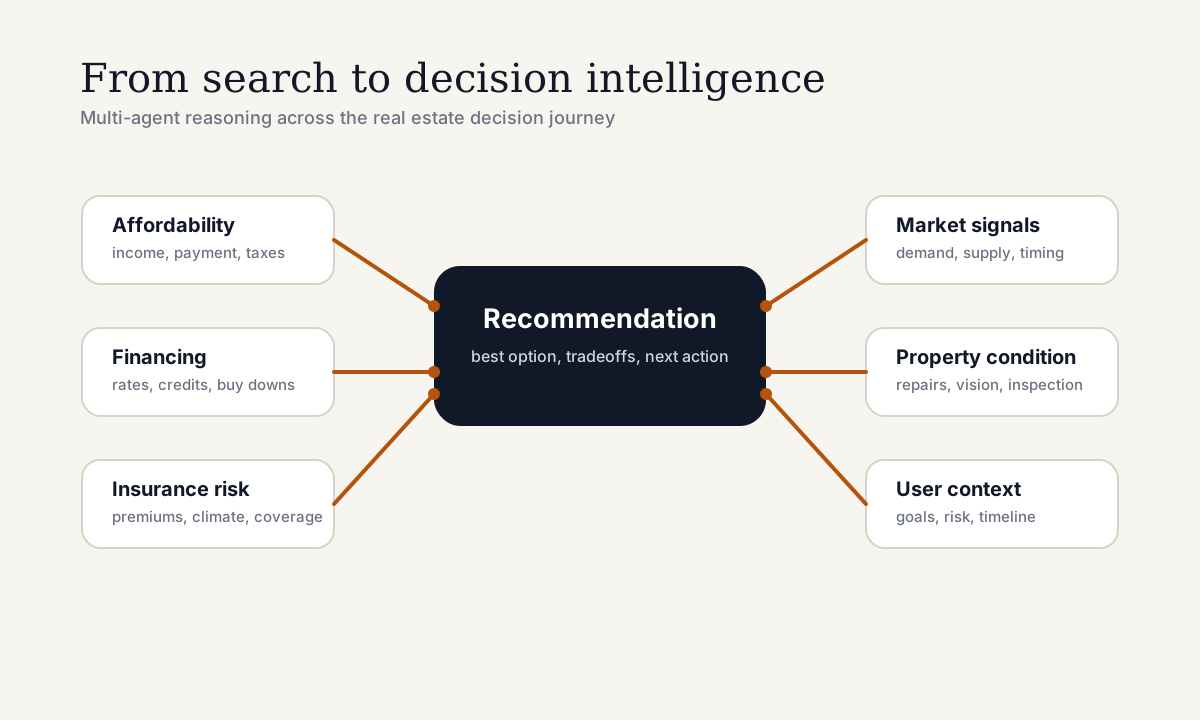
Real estate, lending, insurance, construction, taxes, neighborhood data, and macroeconomic signals all influence the outcome. Today, these signals often live in separate workflows. The opportunity is to bring them together in a way that helps people make better decisions, not just browse more options.
This is the same architectural question showing up in property management AI: should intelligence sit on top of the stack, or should it live inside the system of record?
Imagine a buyer experience where the system understands income, mortgage rates, insurance estimates, property taxes, repair risk, and affordability thresholds. Instead of only showing homes, it could explain that a property only works if the seller offers a rate buydown or closing credit.
Imagine an investor experience where the system evaluates NOI, vacancy risk, financing costs, insurance escalation, and local demand before recommending whether to buy, hold, refinance, or walk away.
Imagine a builder experience where the system tracks tariffs, supplier delays, labor shortages, and material costs to guide sourcing, pricing, and delivery decisions.
We are already seeing early pieces of this across companies like Redfin and EliseAI. Some are improving search. Some are optimizing leasing. Others are focused on operational workflows. The bigger shift is not any single feature. It is the movement toward a cohesive decision system.
Technically, this is where the problem becomes interesting. This is not a single model use case. It is a multi-agent system.
One agent may focus on affordability. Another on financing. Another on insurance risk. Another on neighborhood trends. Another on property condition using computer vision. The real product is the orchestration layer that brings these agents together, maintains context, and produces recommendations that are useful, explainable, and trusted.
This matters because real estate is not a simple transaction. It is emotional, financial, and deeply personal.
A first-time buyer thinks differently from an investor. A renter relocating for work has different constraints than a family choosing a school district. A homeowner refinancing is solving a different problem than a builder managing cost exposure. Static filters cannot capture that level of nuance.
The product experience is shifting from "here are listings" to "here are your best options, here are the tradeoffs, here is the risk, and here is what you should do next."
That is a fundamentally different experience.
There is also an important caution. Real estate is not a low-stakes domain. A bad recommendation here is not like suggesting the wrong movie. It can affect a family's finances for years.
The winning platforms will not simply be the ones with the most advanced models. They will be the ones that get trust right. Governance, explainability, compliance, and human-in-the-loop systems will matter just as much as model accuracy.
The future is likely not fully autonomous real estate. It is augmented decision intelligence. AI that helps people understand tradeoffs, reduces cognitive overload, and connects fragmented workflows into something coherent.
Housing is not just another category to optimize. It is one of the most important decisions people make in their lives. If built thoughtfully, this is where AI can make a meaningful difference.
Frequently Asked Questions
What is decision intelligence in real estate?
Decision intelligence in real estate means helping buyers, investors, builders, renters, and homeowners evaluate tradeoffs across affordability, financing, insurance, taxes, property condition, neighborhood context, and market timing.
How is agentic AI different from real estate search?
Search helps people find listings. Agentic AI can connect systems, maintain context, compare options, explain tradeoffs, and recommend next steps based on a person's financial situation, timeline, and risk tolerance.
Why does trust matter so much in real estate AI?
Real estate decisions can affect a family's finances for years. AI systems in this space need explainability, governance, compliance, clear escalation paths, and human oversight for high-impact recommendations.
Where can AI create value for property managers?
AI can help with leasing, resident communication, maintenance triage, delinquency workflows, renewals, and operating visibility. The bigger question is whether that intelligence should sit on top of the existing stack or inside the system of record.