April 9, 2026 | Updated May 11, 2026
Why Airline Disruptions Need Agentic AI
Airline disruption recovery is a network coordination problem across passengers, crew, aircraft, gates, policies, and inventory. Agentic AI can help recover faster.
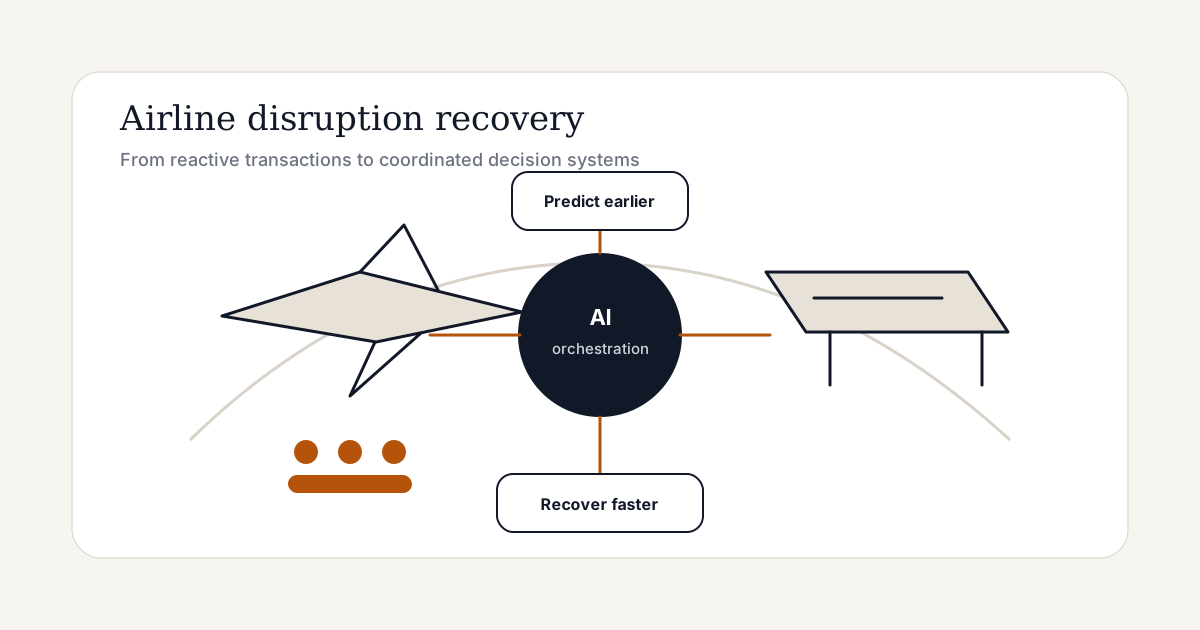
A delayed or cancelled flight may look like one customer service problem. Underneath, it is a network problem where every decision affects another decision.
A disrupted flight is never just a travel inconvenience. It exposes how fragile many airline systems still are when the operating environment changes quickly.
Passengers experience the problem as long lines, missed connections, unclear communication, and manual rebooking. From the outside, that looks like a customer experience issue. In reality, it is a systems design problem.
Airline platforms were built around transactions. Search, book, ticket, check in, board. Disruptions do not behave like transactions. They require continuous decisioning across passengers, crew, aircraft, gates, airports, policies, loyalty tiers, inventory, and downstream connections.
That is why Agentic AI is so relevant to this space. The opportunity is not to place a chatbot on top of an existing workflow. The opportunity is to create a coordinated decision system that can detect, reason, act, and adapt in real time.
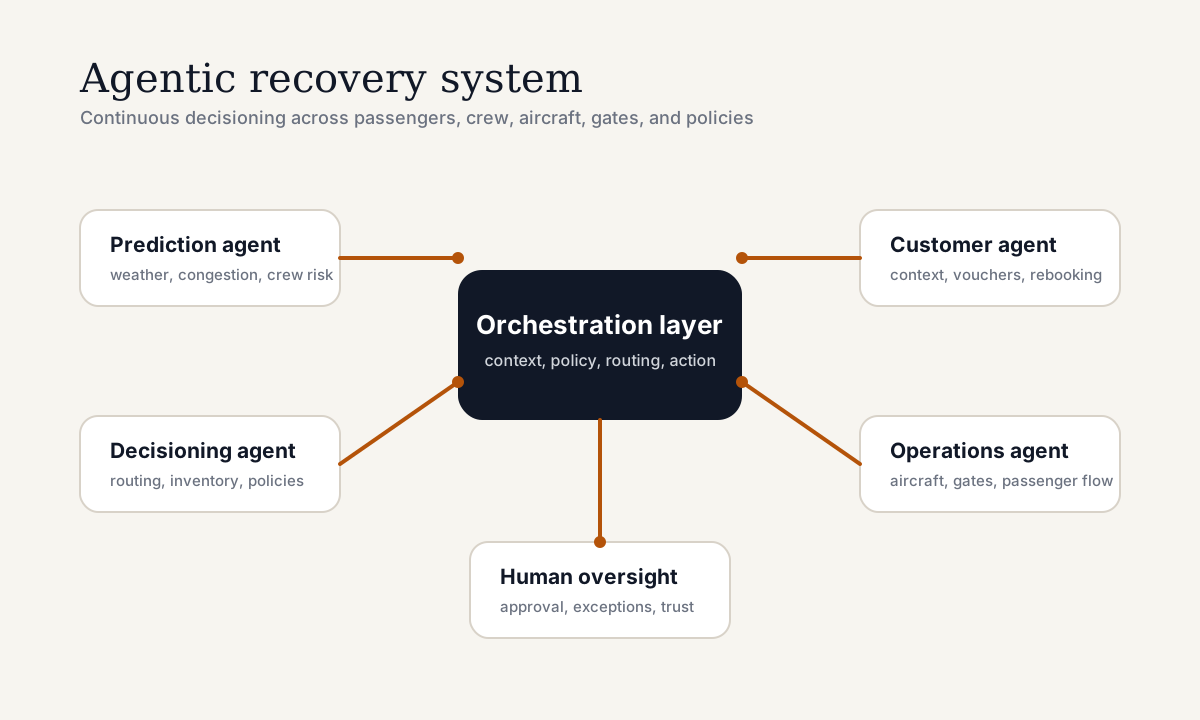
A prediction agent could monitor weather, airport congestion, aircraft readiness, crew constraints, and connection risk before the disruption fully reaches the passenger. A decisioning agent could evaluate alternate routes, fare classes, partner inventory, visa rules, loyalty status, and policy constraints. A customer agent could understand the traveler context, retrieve the right policy, and resolve rebooking, vouchers, or compensation without making the customer repeat the same story multiple times.
The most important layer is orchestration. Airline recovery is not one decision. It is a chain of dependent decisions. Rebooking passengers affects aircraft loads. Aircraft rotation affects crew. Crew constraints affect gates and departure times. Gates affect airport operations. Each decision changes the next one.
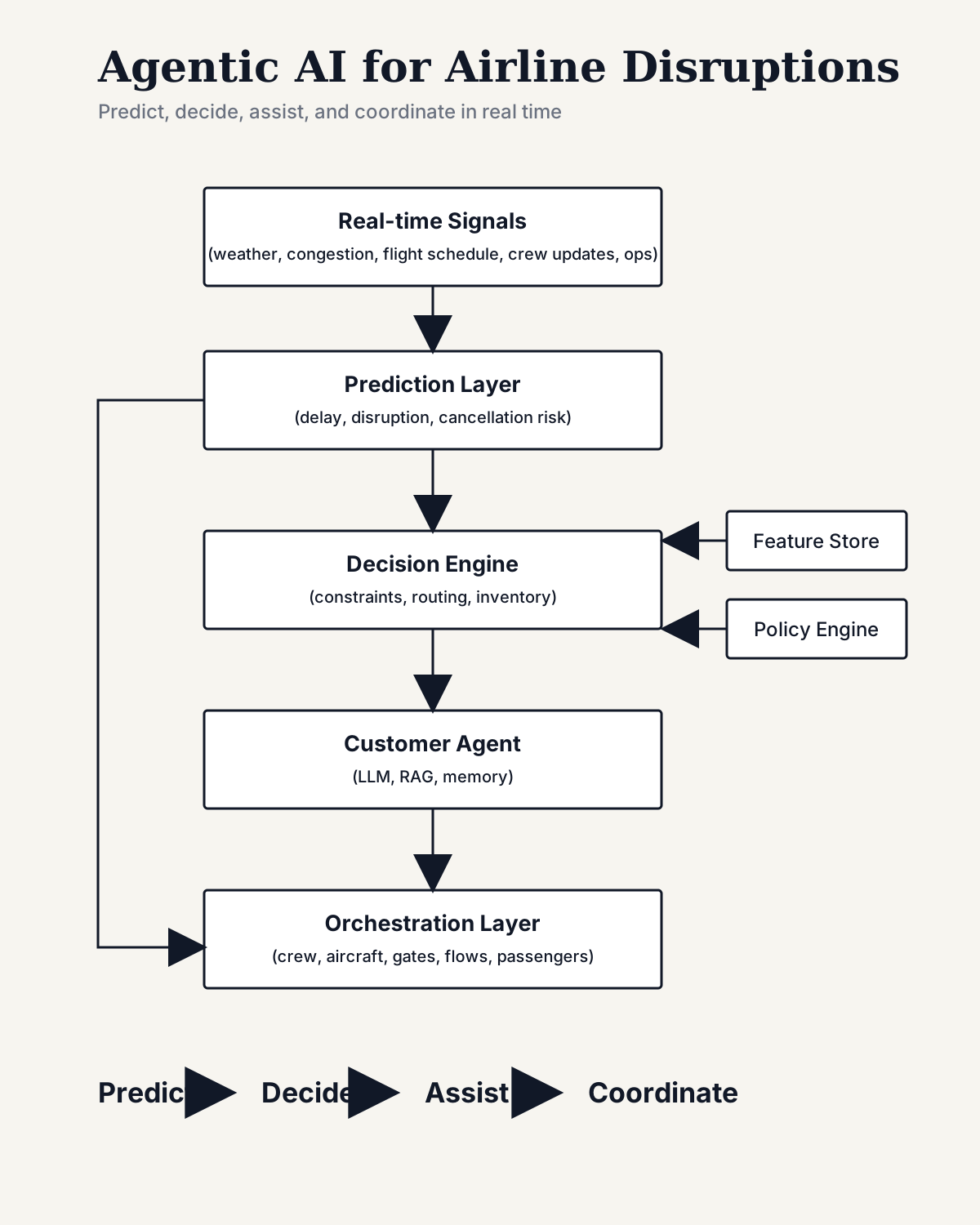
This is where traditional systems struggle. They optimize locally. Agentic systems can be designed to optimize across the network.
When this works, disruption recovery changes meaningfully. Problems can be detected earlier. Recovery can happen in minutes instead of hours. Decisions can be made globally instead of one passenger at a time. Cost to serve can come down while customer trust goes up.
There is also a human side to this. When systems fail, people often step in. Airline staff find small workarounds. Passengers help each other. Those moments matter, and they show the best of human judgment under pressure.
But human kindness should not be the fallback architecture for operational failure.
The role of Agentic AI is not to replace human connection. It is to remove the friction around it. It should absorb complexity, recover faster, and give people more clarity in moments that are normally stressful and uncertain.
That lesson connects directly to the human side of disruption I wrote about in When Technology Stops, Humanity Shows Up.
The future of travel is not just digital. It is predictive, agentic, and continuously adaptive. When built thoughtfully, these systems can give travelers something they rarely get during disruptions today: time, calm, and certainty.
Frequently Asked Questions
How can agentic AI help airlines during disruptions?
Agentic AI can monitor real-time signals, predict disruption risk, evaluate recovery options, assist customers, and coordinate workflows across passengers, crew, aircraft, gates, inventory, and policies.
Why are airline disruptions hard to solve?
Airline disruptions are hard because they involve connected constraints. Rebooking passengers affects loads, aircraft rotation, crew timing, gate availability, airport operations, loyalty rules, and downstream connections.
Should AI fully automate airline recovery?
Not completely. AI can reduce manual work and recover faster, but humans should stay involved for complex cases, safety-sensitive decisions, customer exceptions, and policy judgment.
What is the customer benefit of agentic airline systems?
The biggest customer benefit is clarity. Travelers need earlier warnings, better options, less repeated information, faster rebooking, and confidence that the system understands their situation.