March 28, 2026 | Updated May 11, 2026
When Technology Stops, Humanity Shows Up
A cancelled flight became a reminder that technology creates scale, but human connection, empathy, and shared responsibility sustain people when systems fail.
A travel disruption reminded me that customer experience is not only what happens when systems work. It is also what people feel when systems stop working.
Last week, while traveling to India, I experienced something unexpected.
Our flight was delayed on the runway because of heavy snow and de-icing. At first, it felt like a normal travel disruption. Then the power went out. The air conditioning stopped. The internet was down. Operations could not respond quickly enough, and the uncertainty inside the cabin kept growing.
For a while, it felt like everything was failing at once.
You could sense the frustration building. People were tired, warm, anxious, and trying to understand what was happening. Everyone had somewhere to be. Some were traveling for weddings. Some for reunions. Some for business. Some for long-awaited vacations. Every passenger had a plan, and suddenly every plan was suspended.
Then something shifted.
Without Wi-Fi, screens, or constant notifications, people started talking.
At first it was small. A question across the aisle. A comment about the delay. Someone asking where another family was headed. Then the conversations grew. Strangers began sharing stories, travel plans, and small details from their lives. The cabin slowly changed from a group of frustrated passengers into something that felt more like a temporary community.
People walked around. They checked on each other. They explored different sections of the plane. Parents exchanged knowing smiles. Travelers who would have never spoken under normal circumstances started connecting because the usual digital distractions were gone.
For a few hours, the plane became something rare: a space filled with human connection instead of notifications.
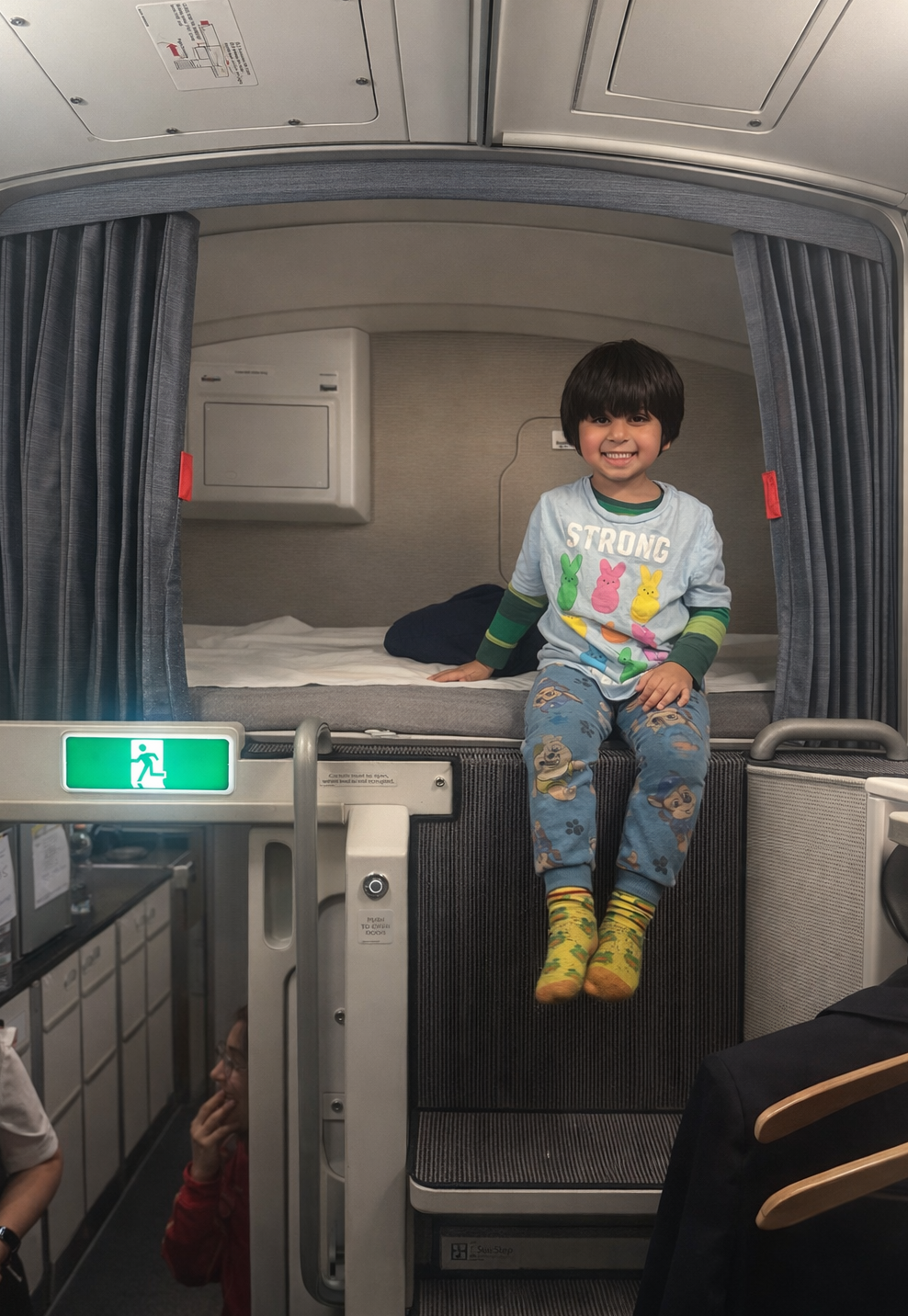
There was also a small, unexpected moment of kindness that I will not forget. The airline staff quietly showed us a hidden crew rest area, a space most passengers never see. My five-year-old got to climb up, explore it, and rest there for a bit.
In the middle of uncertainty, that moment meant everything.
It reminded me that customer experience is not only about systems, apps, and process flows. Those things matter deeply, especially when operations are under stress. But sometimes the moment people remember most is the human one. Someone noticing a child. Someone making space. Someone choosing kindness when the environment is difficult.
Eventually, the flight was cancelled.
The next day, many of us found ourselves standing in a rebooking line for four to five hours. Normally, that kind of wait would feel exhausting. This time, it felt different because we were no longer strangers.
We recognized each other. People checked in. Shared updates. Held places in line. Made space for families. Laughed about the situation. There was still frustration, but there was also patience. The shared experience had changed how people treated one another.
What struck me most was simple: when systems fail, people step in.
In a highly digital world, we often assume technology is what keeps us connected. And in many ways, it does. Technology helps us coordinate, communicate, plan, book, track, and recover. It creates scale. It creates speed. It creates visibility.
But when technology stops, humanity often fills the gap instantly.
People create informal systems of care. They share information. They reduce anxiety. They help families. They make uncertain situations feel more manageable. They bring empathy into places where process has broken down.
That is a leadership lesson too.
The strongest systems are not the ones that pretend failure will never happen. They are the ones designed with enough resilience, transparency, and human judgment to recover well when failure does happen.
That experience later shaped how I thought about agentic AI for airline disruptions, because the best technology should reduce the burden on people during moments like this.
Technology connects us at scale. Human connection sustains us when things fall apart.
Sometimes when systems fail, people become the system.
That is why empathy and execution cannot be separated. I wrote more about that leadership balance in Execution with Empathy.