March 15, 2026 | Updated May 11, 2026
Why Agentic AI Needs Human-in-the-Loop
Agentic AI can take action across systems, but the safest and most useful enterprise systems keep humans involved for judgment, accountability, and trust.
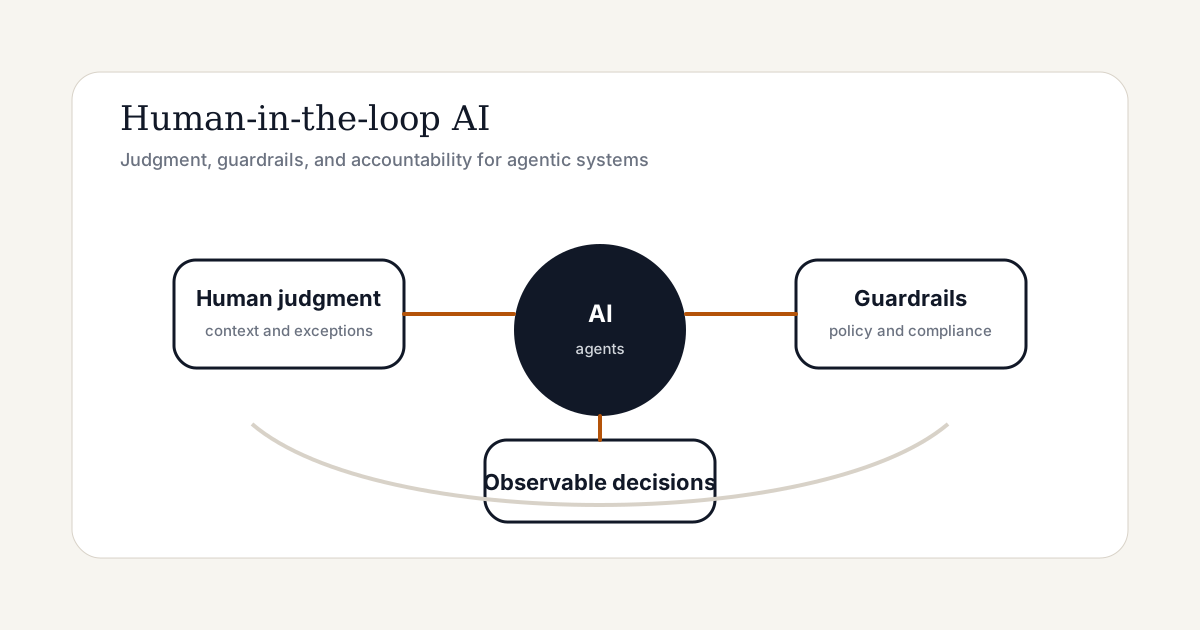
AI systems are rapidly evolving from tools into systems that can recommend, decide, and act.
That shift is exciting, but it also creates risk in high-stakes domains.
In my experience building platforms at Amazon, Expedia, and GEICO, fully autonomous systems rarely work well in isolation. The real world is messy, ambiguous, and full of edge cases.
The next generation of AI systems will understand context, make recommendations, and take actions across systems.
But the key question is not what AI can do. It is where humans must stay in the loop.
In travel disruption scenarios, AI can generate options, but humans validate complex edge cases. In insurance, AI accelerates underwriting, but decisions require compliance and policy awareness. In customer support, AI resolves most requests, but escalation paths must remain clear.
The future is not AI-only.
It is AI plus human-in-the-loop.
The systems that win will combine the speed and scale of AI with human judgment, accountability, strong guardrails, and observability.
That is where real platform innovation is happening.
It is also why AI in production needs more than a compelling demo. I wrote more about that in AI in Production Is Very Different from AI in Demos.
Human oversight does not mean slowing everything down. It means designing the system with clear thresholds. Low-risk, repeatable tasks can be automated. Ambiguous or high-impact decisions should be reviewed, explained, or escalated. That balance is what makes AI useful in real operating environments.
In real estate decision intelligence, for example, AI may be able to evaluate affordability, insurance risk, financing options, and repair exposure. But a family deciding whether to buy a home needs transparency and human judgment around the tradeoffs. In property management AI, automation can help leasing and resident operations, but fair housing, privacy, and escalation controls still matter.
The real goal is not to keep humans involved everywhere. The goal is to keep humans involved where judgment, accountability, empathy, and trust matter most.
Frequently Asked Questions
What does human-in-the-loop mean in agentic AI?
Human-in-the-loop means the AI system can automate parts of a workflow while routing uncertain, high-risk, sensitive, or policy-heavy decisions to a person for review or approval.
Does human oversight make AI less efficient?
Not if it is designed well. Human oversight should focus on the moments where judgment matters most. The AI can still handle repetitive work, gather context, draft recommendations, and reduce the burden on teams.
Which AI use cases need human review?
Human review is important for financial decisions, housing, insurance, healthcare, travel disruption recovery, legal or compliance-heavy workflows, and any situation where a wrong recommendation can materially affect a person.
Why is explainability important for agentic AI?
When AI takes action, users and operators need to understand why it made a recommendation, what data it used, and when a human should step in. Explainability is part of the trust model.